In an emergency, you are likely to be time-constrained and have high levels of stress and adrenaline. Under these conditions, you may not be thinking clearly and may panic.
Therefore, it is important for you to create an emergency plan ahead of time. This plan will help you and other members of your household know what to do in a crisis.
Identify emergencies that are most likely to happen where you live
Residents living in the City of Whittlesea’s outer suburbs are more vulnerable to grassfires, and those in more rural areas should be prepared for bushfires. It is also important to consider housefires, storms, floods, and extreme heat.
Discuss your emergency response with your household
Plan for each type of emergency, considering different scenarios.
Discuss where you would go if you needed to evacuate your home and were unable to return soon after. Depending on the type of emergency and where it has occurred, you may need multiple options for where you can evacuate to.
Choose two places to meet up if you and members of your household are separated (one location nearby, and one outside your neighbourhood).
Choose two family members or friends (one local, one interstate) as emergency contacts and ensure everyone in your household knows how to contact them in case you are separated.
Discuss preparations for your pet.
Record important details on your emergency plan
On your emergency plan, include important phone numbers such as:
- Triple Zero (OOO)
- SES (132 500)
- medical services
- electricity, gas, water, and other service providers
- insurance providers
- emergency contacts
- relatives, friends and neighbours
- work, school and childcare providers.
You should also include:
- details of places you might stay during an evacuation, and your two meeting places in case you are separated from other members of your household
- the route you would take to your evacuation locations and meeting places, including alternate routes in case roads are impassable
- essential medical details, such as medications and doses, plus hospital and GP details
- radio frequencies of your local radio station and ABC Radio
- details relating to your pets, such as veterinarian information and medications.
Practise your plan
You should review and practise your plan regularly (at least twice a year), ensuring all members of your household take part.
Prepare a home emergency kit and ensure all members of your household know where it is located.
Display your emergency plan where all members of the household can see it, such as on the fridge. Put a copy in your home emergency kit, and consider providing copies to your emergency contacts, relatives, friends, and neighbours.
Resources to help you create your emergency plan
Every household should have a home emergency kit that contains items that you will need, should you have to leave your home. Remember that each household has slightly different needs and the more people you have in your family, the more supplies you will need.
View the home emergency kit checklist(PDF, 996KB)
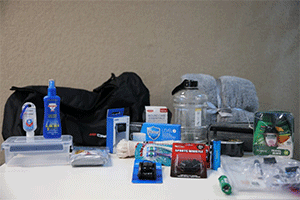
We recommend that your household follow these preparation tips:
- Review the contents of your kit every few months to ensure medications and food are in date, clothing fits the children, batteries are charged, information on USB sticks are current.
- Ensure that everyone in your house knows where your emergency kit is.
- Keep a list of all the items in your kit, including expiration dates.
- Store important items, like sleeping bags, air mattress, valuables and photos near your emergency kit for quick and easy access.
- Write a list of any additional or oversize items that you may want.
- There may be some items that won’t fit in your kit or that you may not want to store in your kit. Instead, put your absolute essentials in your kit and keep a list of items that you would also want to take in the case of an evacuation, if you have time.
Emergencies put us, our loved ones and our communities at risk and it is important to be prepared and know what to do.
Risks can be different based on where you live.
Watch the following video to understand your emergency risks and how to prepare.
Technology can help you to prepare and stay safe in the event of an emergency.
Watch the following video to understand what applications you should download to help you prepare and stay informed, before, during and after emergencies.
If you have pets, it's also important to plan for how to manage them during emergencies.
Visit the Agriculture Victoria website for guidance on planning for pets in emergencies.