Wollert Rail
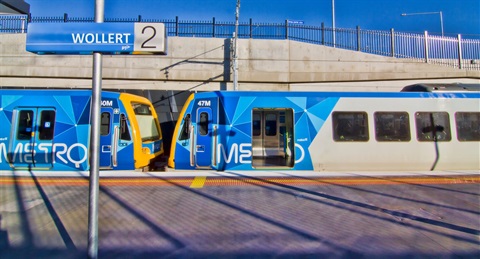
Endorsed in December 2025 and updated in September 2026, our Advocacy Prospectus 2025–2029(PDF, 15MB) details Council's decision to focus on Wollert Rail and continue to advocate for heavy rail as the preferred long-term community outcome.
Ahead of the Victorian state election, Council’s advocacy is focusing on:
- the immediate release of the Wollert Transport Corridor Feasibility Study
- preservation of the rail corridor using a Public Acquisition Overlay
- acquisition of the remaining 5 per cent of land needed for the Wollert Rail Corridor.
The impact of this project is significant for our community, but it is also vital to sustain business and industry growth in the Epping Metropolitan Activity Centre.
Background and forecasts
The 2002 Epping North Strategic Plan identified a planned public transport corridor that included a train line to Wollert, influencing the decision of many residents to buy property in nearby areas.
The integration of rail was intended to support high-density development and vibrant activity centres around transport interchanges. Residents now expect the Victorian Government to deliver on this promise to enhance liveability, protect housing investments, and support community growth.
Projections show strong demand, with about 15,000 daily trips initially and 40,000 daily trips by 2040.
The Epping North and Wollert growth corridor is projected to grow by 101 per cent by 2041.
Wollert Rail will:
- remove at least 2,000 cars per hour from congested roads
- connect residents to jobs and vital services in key local precincts such as Cooper Street, Northern Hospital, Pacific Epping and the Melbourne CBD
- create a vital connection to the Epping Metropolitan Activity Centre, enabling growth and density in Epping
- improve access to the Northern Hospital, which treats nearly 90,000 patients annually and employs more than 3,000 staff
- increase property values by $2.44 billion by 2030
- deliver 500,000 hours and $522.8 million in travel time savings to road users by 2030
- generate two million hours and $1.5 billion in travel savings to rail users annually by 2040
- help achieve the mode share targets outlined in the City of Whittlesea Integrated Transport Plan 2024–2034.